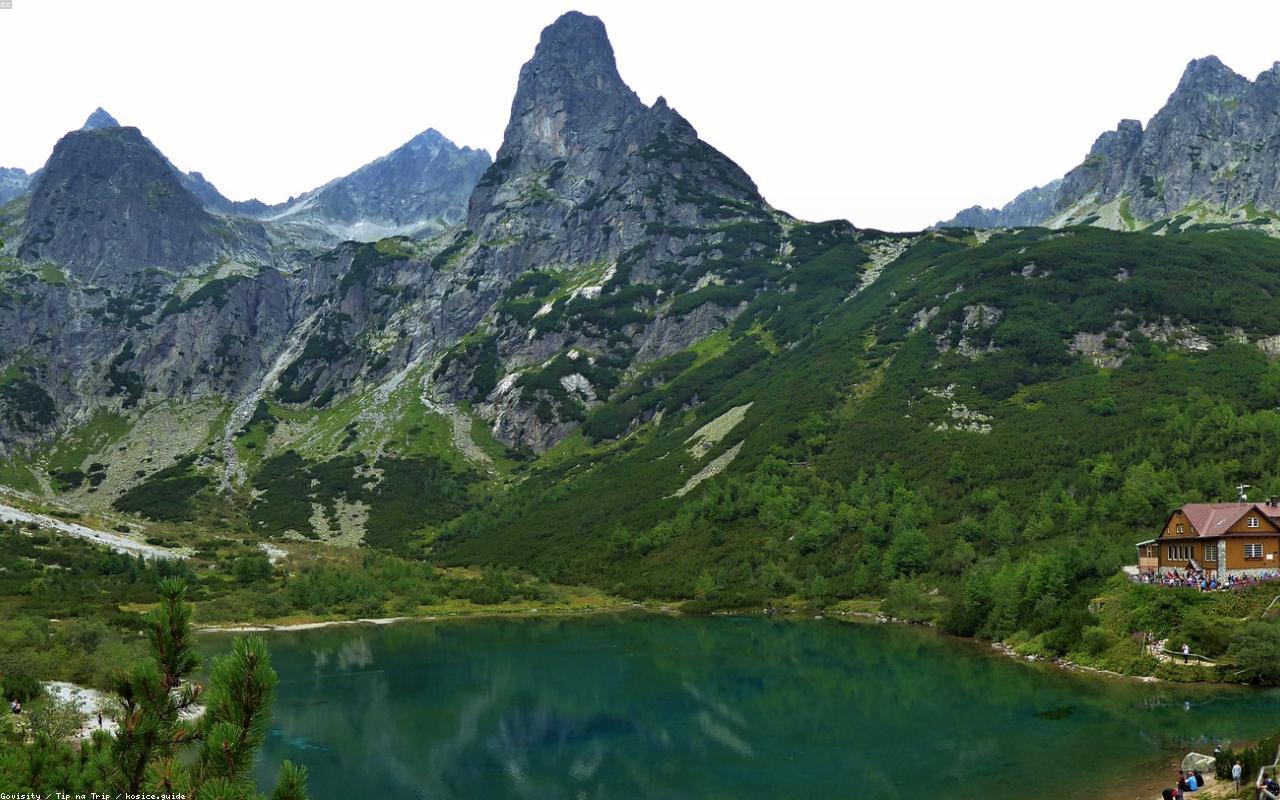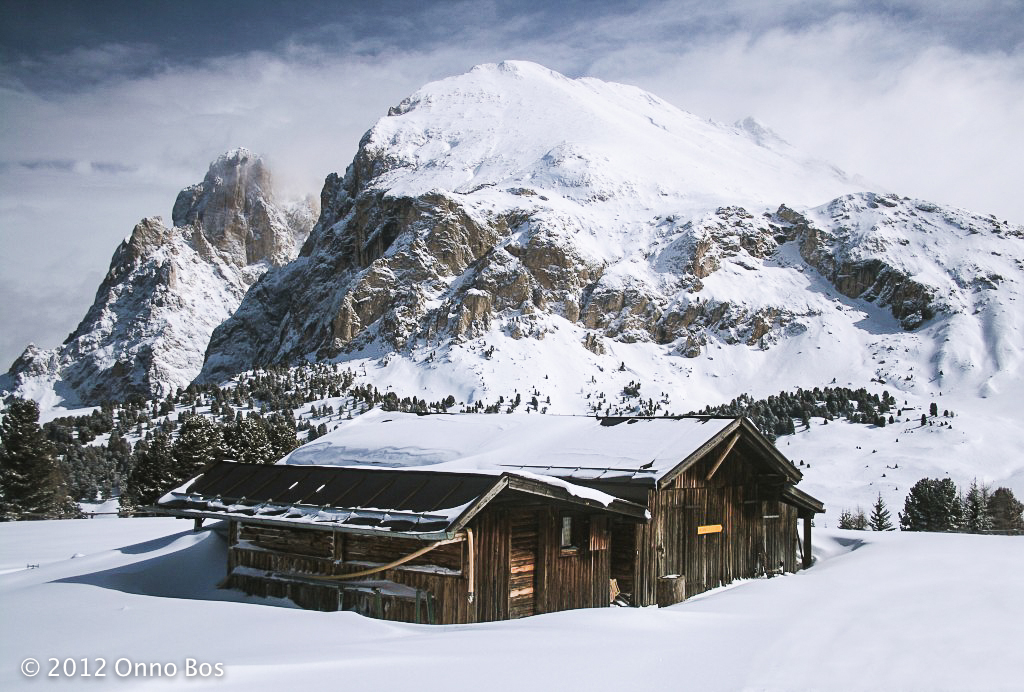
The Rifugio Walter Bonatti sits at 2,025 metres on the high balcony of the Italian Val Ferret, with a view across the valley to the south face of the Grandes Jorasses. It is a long stone building with a south-facing terrace and a roofline pitched against winter snow loads.
The refuge was built in 1998 by the commune of Courmayeur with the cooperation of Walter Bonatti himself, who attended the dedication. He was sixty-seven that year. He died in 2011 at seventy-eight.
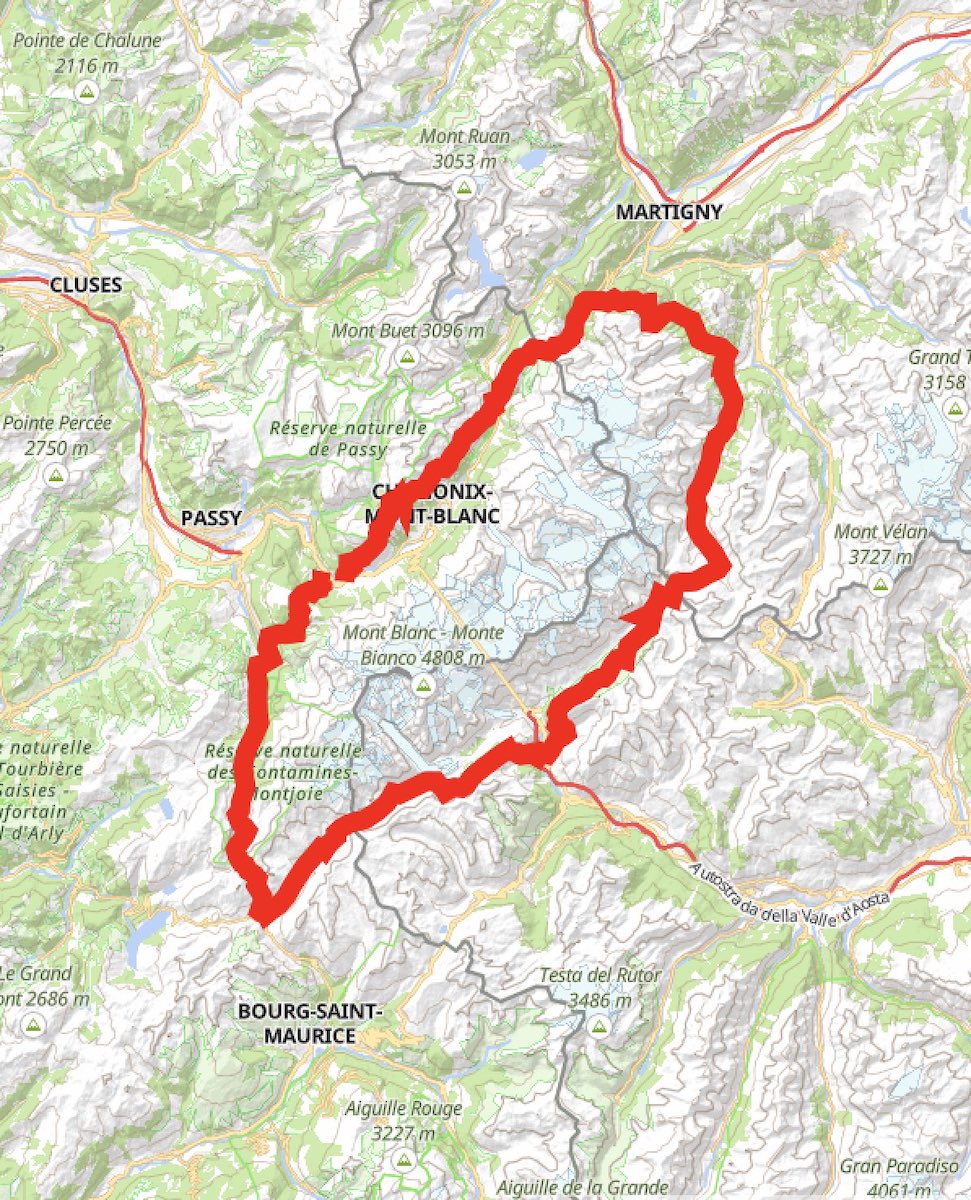
The Bonatti is one of the principal stops on Stage 8 of the standard counter-clockwise Tour du Mont Blanc, between the Italian Rifugio Bertone and the Swiss Refuge de la Peule. In a typical TMB summer it sees between 6,500 and 7,500 guest-nights.
The current warden, Fabrizio Mochet, has run the refuge since 2014. He took over from the founding warden, Giorgio Bertone's son Alessandro, in a transition that was, by local accounts, smooth and slightly emotional.
Mochet is forty-eight and from Courmayeur. He worked in the kitchen of the Hôtel Royal e Golf in town for fifteen years before he came up to the Bonatti. His menus reflect the training: more polished than most TMB refuges, less precious than they could be.
Dinner is a fixed three courses at 19:30. A polenta concia or a soup, a meat or vegetable second, a small dessert. The Aosta Valley reds are present and reasonably priced. The bread is baked twice a day at the refuge.
The Bonatti sleeps eighty in a mix of dormitories and small four-bed rooms. The rooms are simple but warm: wool blankets, painted board walls, no decoration beyond the occasional black-and-white photograph of Bonatti himself in the field.
The 1998 building has aged well. The exterior stonework was repointed in 2018. The kitchen was modernised in 2022 with a new induction range and improved ventilation. The dormitory bunks were rebuilt in winter 2024 by a small carpentry firm in Morgex.
The approach to the refuge from the Lavachey trailhead in the valley below climbs 480 metres over three kilometres on a well-graded path. Most TMB walkers arrive between 14:00 and 17:00. Mochet keeps a clipboard at the door for check-ins.
The most common languages at dinner, by his rough count, are French, English, German, Italian, Korean, and Spanish, roughly in that order. The TMB has internationalized considerably since 2010. Mochet says the Korean walking groups, in particular, have become a familiar summer presence since about 2018.
The Bonatti's terrace faces directly toward the Grandes Jorasses' Walker Spur, six kilometres distant across the valley and 2,200 metres above the refuge. On clear summer evenings, walkers sit with a glass of wine and watch the light move across the wall.
The Walker Spur, climbed first in August 1938 by Riccardo Cassin, Ugo Tizzoni, and Gino Esposito, was one of the routes Bonatti himself studied in his early years. The refuge's siting was, in Bonatti's own words at the 1998 dedication, an attempt to put the wall in front of the people.
Mochet keeps a small library inside the dining hall: a 1962 first edition of Bonatti's Le mie montagne, a selection of CAI bulletins, and a binder of TMB stage information in five languages. The library is consulted often. The Bonatti book has been re-bound twice.
The refuge does not take credit cards on the mountain. Payment is in cash or by Italian bancomat transfer to a posted account number. The bill for a half-board night in 2026 is 78 euros for non-CAI members and 58 euros for members.
Water at the Bonatti comes from a spring 90 metres above the refuge, gravity-fed through a buried pipe. The supply is adequate even in dry summers, with a small storage tank that buffers the peak evening demand.
Solar panels on the south roof feed a battery bank that runs the lighting, the freezer, and the kitchen extraction. A diesel generator backs up the system in October and is run for two hours each evening when needed. Mochet would like to extend the solar storage in 2027.
Mochet keeps his own logbook of weather and visitor numbers. The 2025 season ran from 14 June to 22 September. Total guest-nights: 7,180. Helicopter resupply flights: nineteen. Closed days due to weather: zero.
Bonatti's name is everywhere in the valley and not always well used. Mochet, who knew him slightly, says the refuge tries to be a working mountain house rather than a shrine. The man himself, by all accounts, would have preferred that.
On the wall above the entrance is a small bronze plaque with three lines from Bonatti's writing on the central pillar of the Frêney, climbed in 1961. Mochet has not had it polished. He says the patina is appropriate.