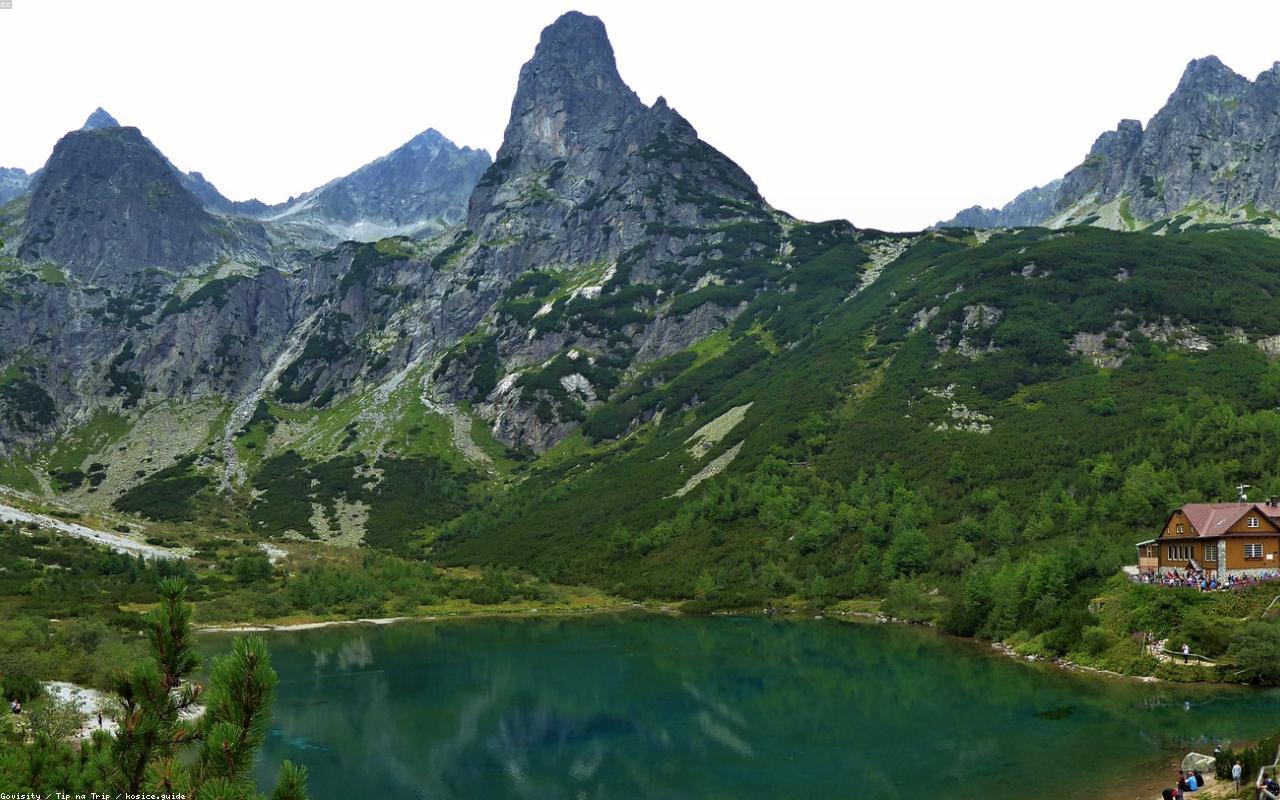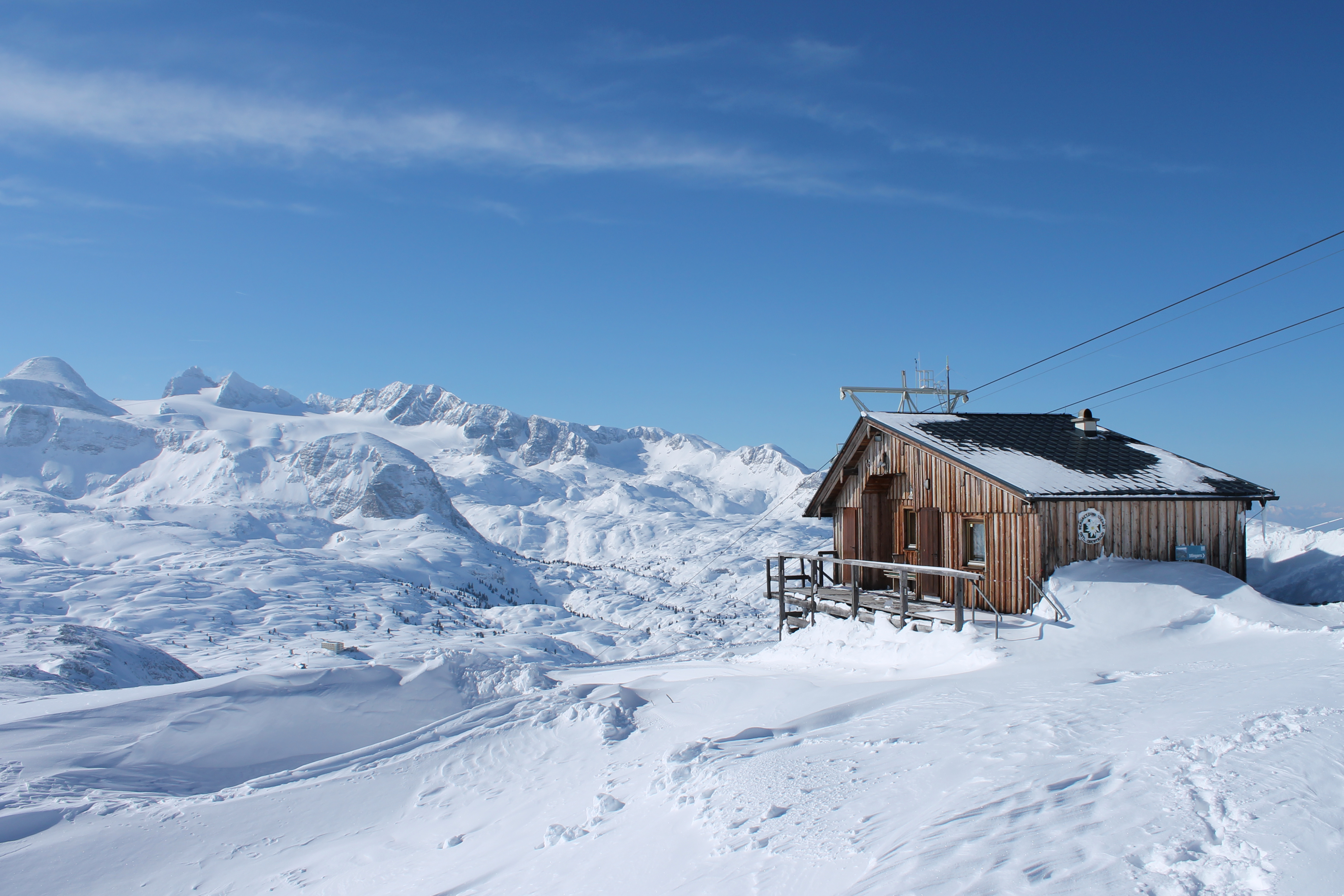
The Schiestlhaus stands on a limestone shelf at 2,156 metres on the Hochschwab massif in northern Styria. From the door, the Hochschwab summit is a forty-five-minute walk southwest, with 122 metres of gain.
The hut is operated by the Naturfreunde Österreich and has been continuously staffed in summer since the present building was completed in September 2005. The architects were Treberspurg and Partner of Vienna, who designed it as a passive solar structure with no fossil-fuel heating.
It is the highest hut in the Eastern Alps with a permanent water supply, year-round power, and a kitchen capable of serving forty covers in a sitting. The previous building on the site, dating to 1880, burned in 2002.
The current Schiestlhaus is clad in untreated larch that has weathered to a pale silver across two decades. The south face carries 38 square metres of photovoltaic panels and 22 square metres of solar thermal collectors. The roof angle, 38 degrees, was set by the latitude and the average winter snow load.
Inside, the hut sleeps sixty in a mix of dormitories and four-bed rooms. The walls are dense triple-glazed and the air-handling unit recovers eighty-five percent of outgoing heat. Internal temperature in winter, with no auxiliary heating, holds at around fourteen degrees when the building is occupied.
Warden Karoline Lechner has run the hut since 2019. She is the third warden in the building's history. Her predecessors, Markus Pfeiffer and the husband-and-wife team of Bernhard and Eva Steininger, between them set the operating rhythms she has largely preserved.
Lechner is forty-four and a trained gastronomy chef. She came to the Schiestlhaus from a hotel kitchen in Mariazell and says the work suits her better. She runs a staff of three in summer and one in shoulder season.
Breakfast at the Schiestlhaus is served between 06:30 and 08:00 and is included in the bunk price. It is bread, butter, jam, three kinds of cheese, sliced ham, and coffee or tea. The bread arrives by helicopter every five days from a bakery in Aflenz Kurort.
Lunch and dinner are à la carte. The menu is short and changes by what comes up on the supply flights: gulaschsuppe, kasspatzn, a Styrian beef stew with horseradish, apple strudel. Beer is on tap. Wine is by the glass.
The approach to the hut from the Seewiesen trailhead climbs 1,150 metres over seven kilometres. Most parties take four to five hours. The final hour crosses the karst plateau, where the trail is marked by cairns and faded paint stripes and is almost impossible to follow in fog.
Lechner's logbook recorded 11,400 guest-nights in 2025, a number that has been roughly stable since 2018. The hut is fully booked most weekends from late June through early October. Mid-week vacancies are common.
The passive design has held up. In twenty years of operation, the building has consumed no diesel for heat and very little propane outside the kitchen. A 2024 audit by the Technical University of Graz found the heating-energy demand at fifteen kilowatt-hours per square metre per year, less than a quarter of the Austrian alpine-hut average.
The composting toilet system has required two overhauls, in 2011 and 2022. The greywater treatment uses a small reed bed inside an insulated shed downhill of the kitchen. The reeds, a hardy plateau-adapted variety, were sourced from the Neusiedler See.
Snowfall in 2025 reached 4.6 metres of cumulative depth by mid-March. The hut remained accessible to ski tourers throughout the winter, though the upper kilometre of the summer trail requires avalanche awareness and is not recommended after fresh snow.
Lechner keeps a winter caretaker hut, a smaller adjacent structure, open for self-catered ski tourers from December through April. It sleeps twelve on a first-come basis. The fee is twenty euros a night, paid into an honesty box.
The Hochschwab plateau is karst and water moves underground. The Schiestlhaus draws its supply from a small spring 180 metres below the hut, lifted by a low-power pump that runs only on surplus solar. In dry summers, water is rationed.
Lechner says the most useful thing she has learned in seven seasons is to be slow with the weather reports. Visitors who insist on summiting the Hochschwab in marginal conditions are reminded that the karst plateau is a poor place to be in cloud. Most listen.
The hut is closed for two weeks in late October for the annual maintenance cycle. Snow removal from the solar panels, when needed, is done by hand with a long-handled brush. Lechner has not yet decided whether to renew her contract beyond 2027.
The Schiestlhaus is, by most measures, an unromantic building. There is no carved gable, no antler chandelier, no soot-blackened beam from an older century. It is a quiet machine for staying warm at altitude, and it works.