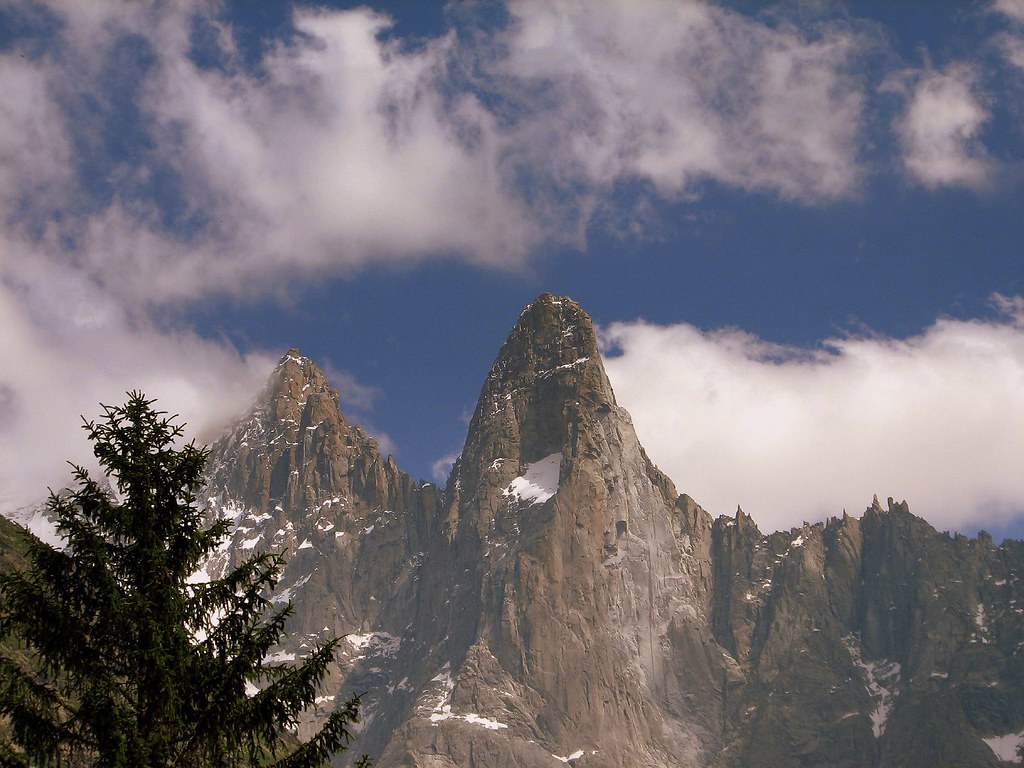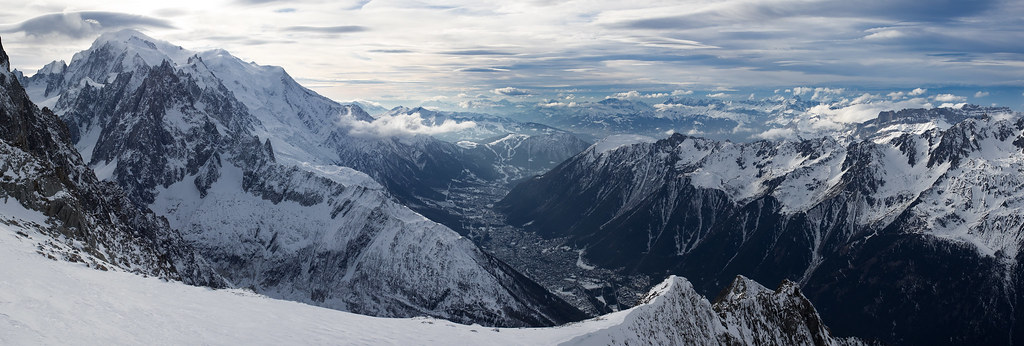
On 11 April 2026 at 06:20, Henrik Solberg and three companions rode the first cable car from Chamonix to the Aiguille du Midi, stepped off the arête at 3,842 metres, and roped up for the first descent of the Haute Route.
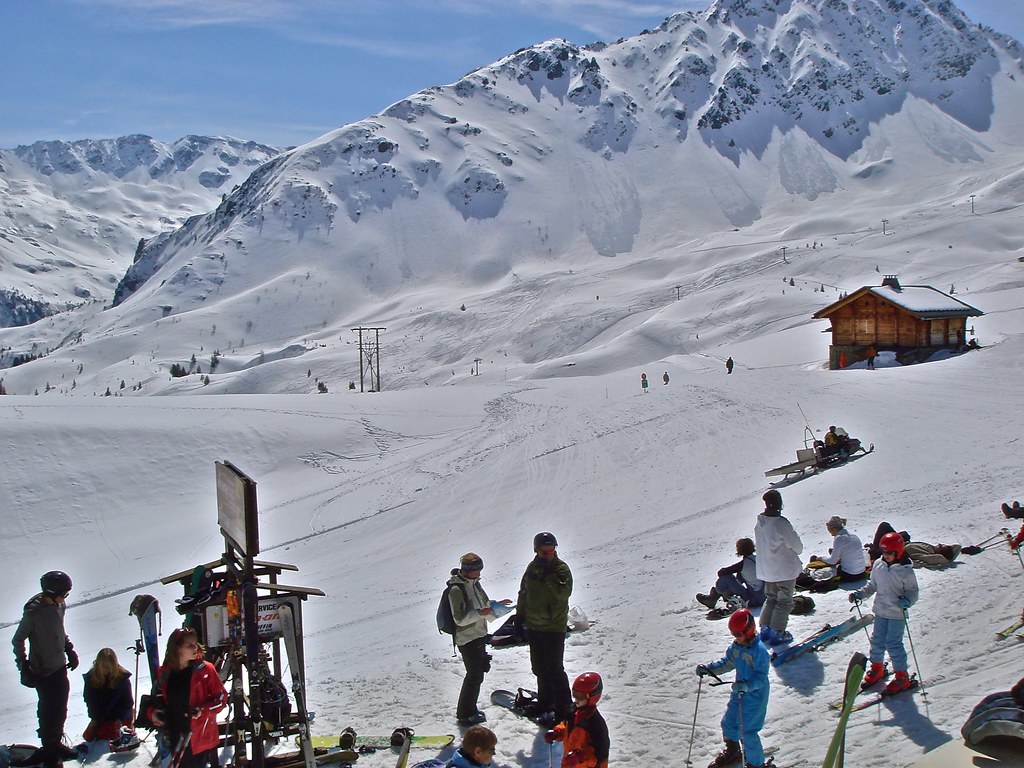
The Haute Route is the classic high-altitude ski traverse from Chamonix to Zermatt, a sequence of glacier crossings and high cols that runs for roughly 120 kilometres across the highest part of the Pennine Alps.
It was first walked in summer in 1861 by members of the British Alpine Club and first skied as a continuous traverse by a Swiss party in March 1911. In 2026 the route is skied by perhaps 1,500 parties each spring.
Solberg, who works as a snow scientist in Tromsø, has skied the route in four previous seasons and has acted as an informal leader for parties of friends who want the experience without the cost of a professional guide.
His three companions on 11 April were a Swedish dentist, a Finnish forester, and a Norwegian journalist, all competent skiers and all members of the same Tromsø ski club.
Day one took them across the Vallée Blanche, over the Col d'Entrèves at 3,527 metres, and down to the Refuge des Cosmiques for the first night. The Vallée Blanche was in good spring condition with refrozen surface that softened by mid-morning to corn.
Day two crossed the Col du Géant into Italy, descended the Mer de Glace into the Vallée Blanche on the Italian side, and finished at the Rifugio Torino. The Rifugio Torino has been operated by the Italian Alpine Club since 1898 and serves the best polenta on the route.
Day three was the longest of the trip. They left the Torino at 04:30, crossed the Col des Grandes Jorasses, descended into the Val Ferret, and climbed back up to the Cabane du Trient on the Swiss side, a total of 1,400 metres of climbing.
The skinning on day three was the kind that decides whether a party finishes the Haute Route together. Two members were skinning ahead and two behind by mid-afternoon, and they regrouped only at the col below the Trient hut.
Day four was a rest day at the Trient, which is the third-largest hut on the route and which serves as an unofficial waypoint for parties evaluating the weather forecast for the upper section.
The forecast for days five through seven was favourable: clear skies, light wind, freezing levels at 2,800 metres. Solberg consulted the SLF avalanche bulletin in the hut warden's office and noted a moderate danger rating on north-facing slopes above 3,000 metres.
Day five crossed the Fenêtre de Saleina at 3,267 metres and descended to the Cabane du Mont Fort, with one short rappel down a rocky step that is fixed with a permanent steel cable.
Day six was the crux of the traverse. They left the Mont Fort at 04:00 and climbed the long glacier to the Col de la Chaux, then traversed under the Rosablanche to the Cabane des Dix.
The Cabane des Dix sits at 2,928 metres on a rocky promontory above the Glacier du Cheilon and is the most spectacularly situated hut on the route. Solberg's party reached it at 14:40, after eight and a half hours of skinning.
Day seven was the long ski day to Zermatt. They left the Dix at 05:00, crossed the Pas de Chèvres on a fixed ladder, climbed the Glacier de Cheilon to the Pigne d'Arolla at 3,790 metres, and descended the long Otemma Glacier to the Cabane de Vignettes.
From the Vignettes they crossed the Col de l'Évêque and descended into Italy via the Aosta high glaciers, then climbed back into Switzerland over the Col du Mont Brûlé and the Col de Valpelline.
From the Col de Valpelline at 3,562 metres they had their first view of the Matterhorn, ten kilometres across the Zmutt valley, in clear afternoon light. Solberg's party stopped on the col for fifteen minutes without speaking.
The final descent from the Valpelline into Zermatt is twelve kilometres of glacier skiing, which becomes piste-skiing for the lower three kilometres, and which finishes at the cable-car station at Furi.
They reached Furi at 17:35 on 17 April. They took the train down into Zermatt, walked to the same small hotel near the station that they had booked in February, and ate raclette for dinner.
What the Haute Route teaches, Solberg said the next morning, is the discipline of skinning at a sustainable group pace across a week of long days at altitude. The skiing itself is not technically difficult.
There is no descent harder than a black piste at a French resort, and there is no climbing harder than walking up a steep snow slope on touring skis with skins. The route's difficulty is the cumulative weight of seven consecutive days of work between 2,500 and 3,800 metres.
Parties fail the route, when they fail, because they have not done enough cardiovascular training, or because they have not understood that one slow member will determine the pace of the whole group, or because they have chosen the wrong week and met three days of storm.
Solberg's party that April had a good week, by the standards of the Pennine Alps in spring. They had four perfect days of corn snow, two cold mornings of refrozen crust, and one afternoon of light cloud that did not develop into anything serious. That is the most a Haute Route party can reasonably ask of April.