On 11 June 2026 at 03:40, Anders Hoffmann and two clients from Vienna left the Sasc Furä hut at 1,904 metres in the Swiss Bregaglia and started up the moraine path toward the base of the north ridge of the Piz Badile.
The Piz Badile is a 3,308-metre granite peak that rises from the Val Bondasca on the Swiss-Italian border. It is the centerpiece of the Bregaglia range, which is the most concentrated area of clean granite in the central Alps.
The north ridge of the Badile was first climbed in 1923 by Alfred Zürcher and the guide Walter Risch, in a single push of fifteen hours from the Sasc Furä hut.
The route is graded IV+ in the UIAA system, runs for roughly 800 metres of climbing, and is considered one of the great classic alpine rock routes of the western Alps.
Hoffmann's clients that morning were two climbing partners of fifteen years, a paediatric surgeon and a high-school physics teacher, both of whom had climbed in the Bregaglia in their thirties and wanted to return for a route they remembered.
They reached the base of the ridge at 05:30, after a 90-minute approach on moraine and easy slabs. The base of the ridge is marked by a small platform with a fixed sling from which previous parties have started.
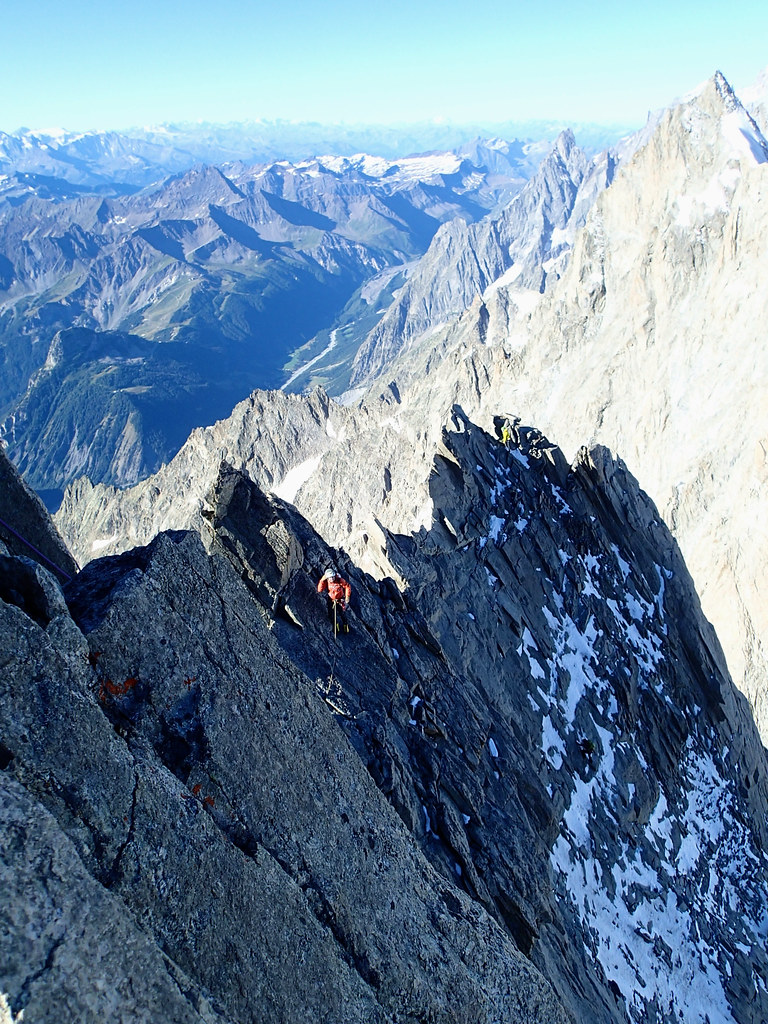
They roped up as three on two ropes, with Hoffmann leading and his clients climbing together in parallel as a second and third, which is the most efficient configuration for a party of three on moderate terrain.
The first 200 metres of the ridge are mid-grade III scrambling on a broken arête. They simul-climbed this section and reached the base of the route's first significant step at 06:45.
The first step is a 25-metre IV crack that leads to a small ledge under a roof. Hoffmann led it in eleven minutes, placing three cams in the crack. His clients followed clean.
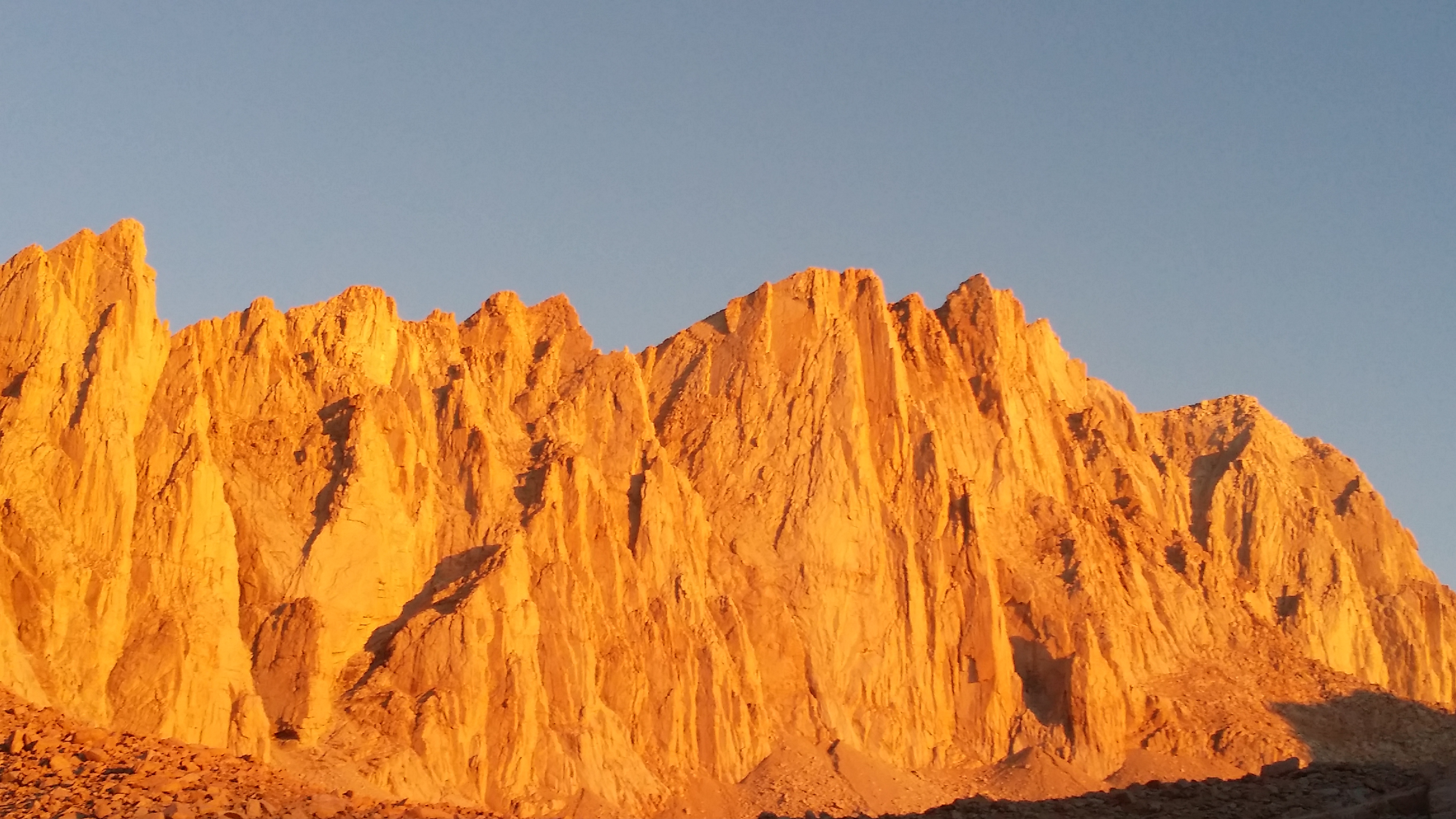
The middle of the ridge is the section that gives the route its character. For 400 metres of climbing the line follows a sequence of cracks and corners on the prow of the ridge, never harder than IV+ but sustained and exposed.
The granite of the Bregaglia is the same Bergell intrusion that forms the cliffs of the Val Masino on the Italian side. It is a coarse, light grey granite with quartz veins, and it takes friction superbly.
By 11:20 they were at the base of the so-called Risch chimney, the crux of the route, named for Walter Risch's lead on the first ascent in 1923.
The Risch chimney is a 30-metre IV+ chimney that splits the upper headwall. Hoffmann led it in eighteen minutes. His clients, who had not climbed a chimney of this length in perhaps a decade, took longer and arrived at the belay slightly out of breath.
From the top of the chimney the route eases. The final 150 metres of the ridge are mostly grade III scrambling with one short IV step at the very top, which leads directly to the summit cross.
They reached the summit at 13:50. The summit of the Piz Badile is marked by an iron cross set into the rock in 1925, and a small log book in a tin box that has been on the summit since 1968.
Hoffmann's clients signed the log book. The physics teacher had signed the same book on 14 August 2009, and showed Hoffmann the entry. The handwriting had changed slightly over seventeen years.
The descent went down the south ridge into Italy, a route that is technically easier than the north ridge but longer and that ends at the Rifugio Gianetti on the Val Masino side.
They reached the Gianetti at 17:40. The warden, Marco Fiorelli, had reserved beds for them and served a dinner of pizzoccheri and braised beef. The Gianetti is one of the few huts in the Italian Alps that still offers half-litre carafes of house wine as a matter of course.
What the north ridge of the Badile offers a climbing party, Hoffmann said over the pizzoccheri, is the experience of moving for an entire day on perfect granite on a line that has not changed in a hundred years.
The route is exactly the same as it was in 1923. The fixed gear at the belays has been replaced, the topo has been refined, the approach paths have been formalised. But the climbing is the climbing Zürcher and Risch found.
There are harder routes on the Badile, on the northeast face and on the north pillar, that demand more from a party. The north ridge does not demand more. It demands sustained competence across 800 metres of moderate climbing, which is a different thing and which is the thing the route teaches.
Hoffmann's clients paid the hut bill the next morning and walked down the Val Masino toward Bagni di Masino, where they had left a rental car at the village trailhead the day before they began the climb.
The Bregaglia is not the most fashionable range in the Alps in 2026. The crowds have moved to the Chamonix Aiguilles and to the Wendenstöcke and to the cliffs of the Mello. But the Badile remains the route a climber returns to when they want to remember why they started.