Jean-Luc Pochon meets his clients at the bottom of the Aiguille du Midi cable car at 06:55, ten minutes earlier than he tells them to arrive, because two of the three are American and he has learned that they will be there at 06:50 and standing in the cold.
He is fifty-six, lean in the way of men who have spent their professional life carrying a thirty-five-litre pack, and he wears, on the lapel of a dark green softshell, the IFMGA pin he was awarded in 1995. He earned it in his second attempt; the first he failed on a snow assessment in the Vallée Blanche.
The clients today are Erin and Mark Sullivan, a married couple from Boulder, both in their late forties, both experienced rock climbers, neither with significant alpine experience. The third is a colleague of Mark's named Davis Yuen, a thirty-eight-year-old engineer from San Mateo who climbs in Yosemite three or four weekends a year.
They have hired Pochon for a single day to do the Cosmiques Arête, the introductory mixed route most Chamonix guides use to acquaint competent rock climbers with the small adjustments alpinism requires. The fee, paid in advance through the Compagnie des Guides de Chamonix, is six hundred and ninety euros for the rope of three.
On the cable car up, Pochon does not talk much. He watches the Sullivans' boots, the way Yuen has packed his harness on the outside of his pack rather than inside it, and the colour of the sky to the southwest. He notes that Yuen has not eaten breakfast and quietly hands him a half-eaten pain au chocolat from a paper bag.
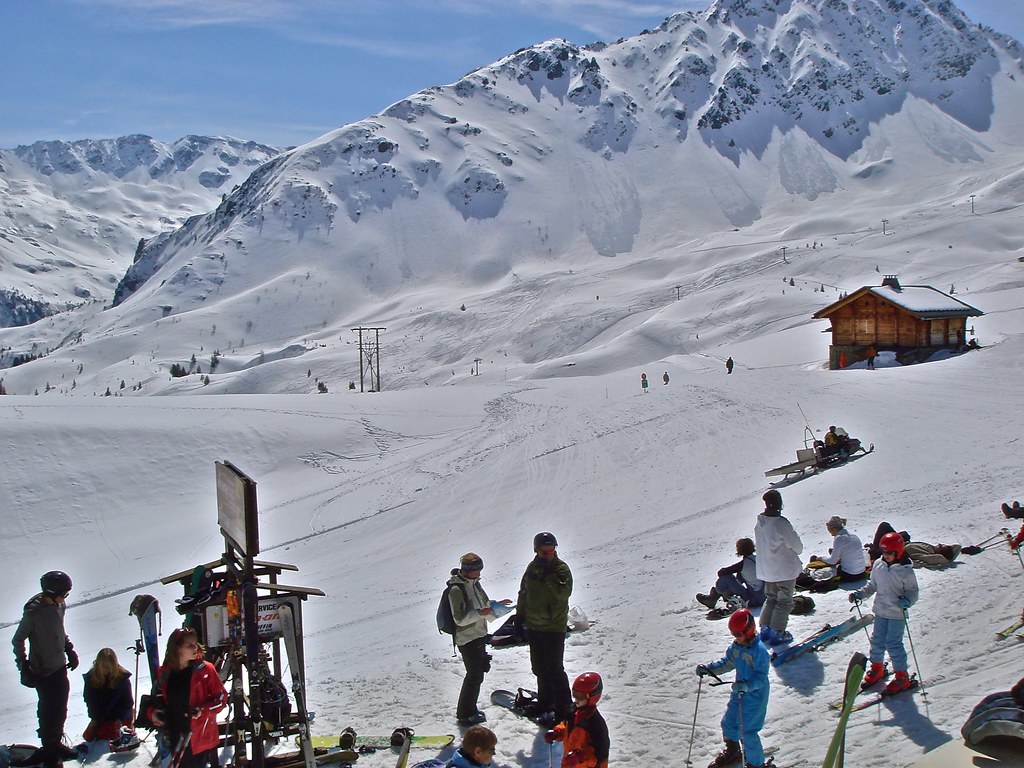
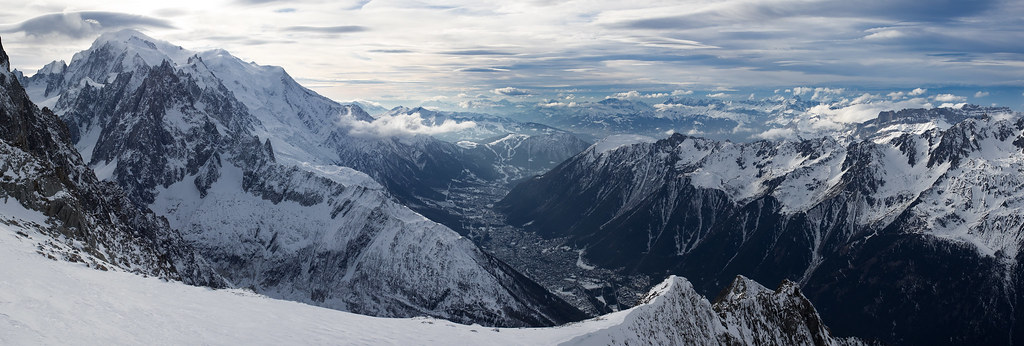
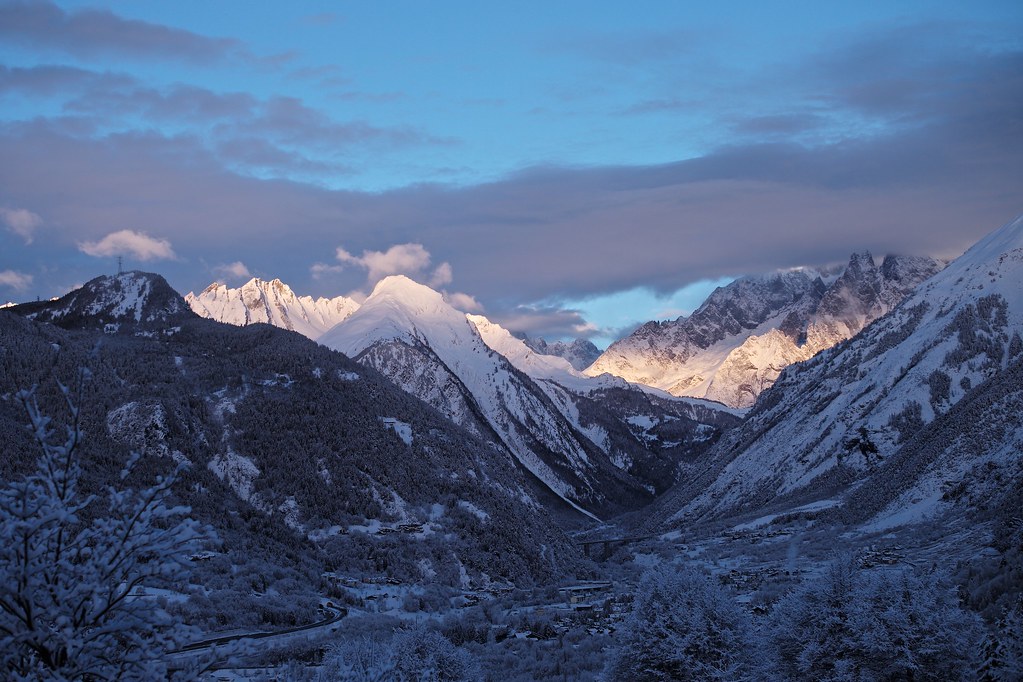
At the top station, the platform is crowded with skiers waiting to descend the Vallée Blanche and with two other guided parties on their way to the same route. Pochon walks his clients to the long ridge that leads down from the cable-car station, attaches them to a single fifty-metre rope at intervals of four metres, and demonstrates, in two languages, how to walk on a short rope on snow.
The first lesson is not technical. It is a question of rhythm. Pochon walks slowly, then more slowly, then at the pace he intends to maintain for the next forty minutes. He does not turn around. He waits for the rope to load and unload behind him and adjusts.
On the upper Vallée Blanche, in the fifteen-minute approach to the base of the route, Erin Sullivan trips once on a small ice ridge and catches herself before the rope tightens. Pochon notices but does not stop. He files the moment.
The Cosmiques Arête is not a difficult route. Its grade in the French alpine system is AD, which in practical terms means it requires basic ice-axe and crampon competence and a willingness to climb a small section of rock at perhaps the third grade with mittens on. Most of its difficulty, as Pochon will say later, is in the management of three other ropes on the same route and the inability of all of them to wait for each other politely.
He places his first piece of gear, a sixty-centimetre sling around a small horn of granite, at the base of the first rock step. The Sullivans watch. Pochon climbs the first short section quickly, without speaking, and constructs a belay above. He calls down for Yuen to come first, then Mark, then Erin.
His instructions are brief and almost without verbs. He says "feet," and Yuen looks down and adjusts. He says "rope," and Mark, twenty seconds later, sees the loop he has formed under his own foot and steps out of it. Erin, last, climbs the section in two minutes flat and asks no questions.
Pochon's belay is an example, to a watching examiner, of efficiency without elegance. A single cam in a flake, backed up by a sling around a second horn, equalised with a long sling and a single locking carabiner. He has done this six thousand times. The construction takes eleven seconds.
At the second belay, just below the route's small ice section, Pochon stops to drink water and to say, for the first time that morning, more than a sentence at a time. He explains what he sees as the next ten minutes' problem. The party in front of them is moving slowly, the ice is in shadow, and the wind is rising from the northwest.
He decides to wait. He does not offer to climb past the slower party. He sits down in the snow, eats a piece of bread, and asks Davis Yuen about the engineering firm where he works. For seven minutes the rope is loose on the snow and the Sullivans look at their watches.
At 10:42 the route ahead clears. Pochon climbs the ice section in four placements, places one screw at the top, and brings up the rope. Mark Sullivan climbs the ice slowly and carefully, and at the screw he says, looking up, that the placement is better than his own would have been. Pochon says nothing.
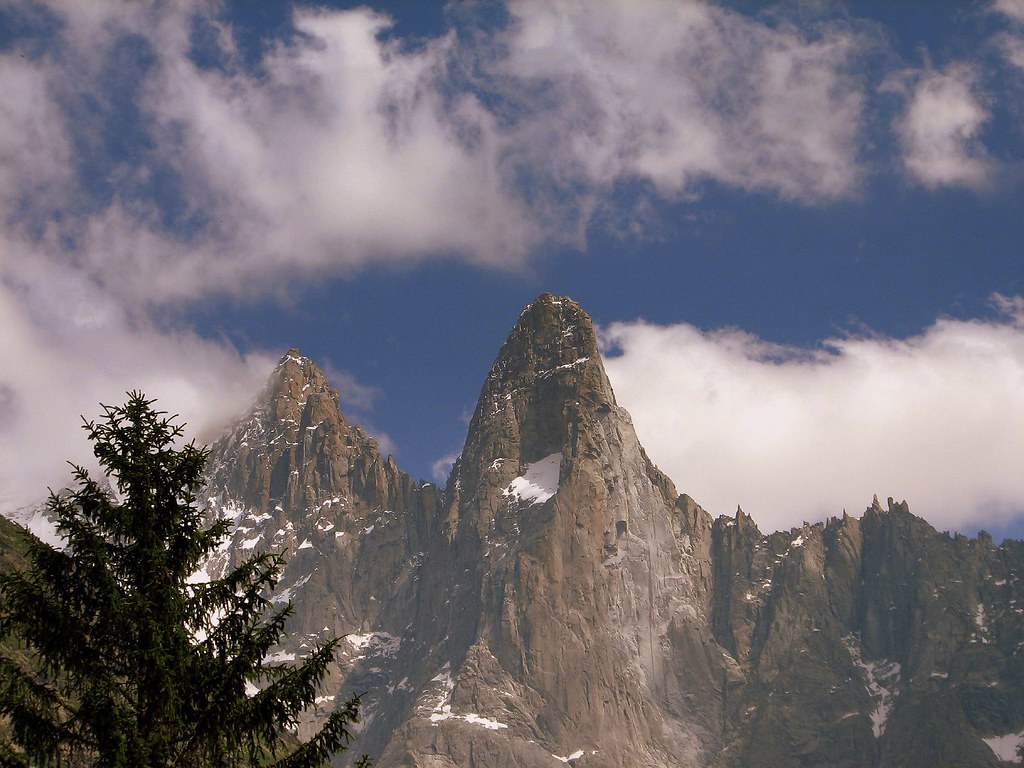
The route's final section is a short mixed traverse on the south face of the Midi itself. By 11:30 they are back on the cable-car platform, having taken three hours and twenty-three minutes for a route that some guides do in two and a half hours and some take four hours to complete. Pochon's time, he will say later, is the time the slowest member of the rope can sustain without losing the day's pleasure.
In the cafeteria, over hot chocolate that costs four euros and ninety cents a cup, Pochon writes in a small notebook for two minutes. He records, by his own habit, three things: a placement that worked, a placement that didn't, and a small observation about each client. He has kept these notebooks since 1996.
Erin Sullivan asks him whether he will guide them again the following day on a longer route. Pochon, who has been asked this question many times by clients pleased with a first day, says that he will think about it overnight and tell her in the morning. He knows already that the answer will be no, because the weather forecast for the next day is for a hard southwest wind and the Sullivans, while competent, are not yet ready for the route they have asked for.
On the descent in the cable car, Pochon stands by the window and watches the south face of the Midi as the cabin drops past it. He has guided this route an estimated three hundred and twenty times. He still looks at it.
At the bottom station, he shakes each client's hand, returns the unspent portion of the day's gear rental, and walks across the parking lot to a small Citroen van in which his black labrador, named Roux, is asleep on the passenger seat. The dog wakes, looks at him, and goes back to sleep. Pochon drives home.