On the morning of 14 December 2025, the forecaster on duty at the Utah Avalanche Center, Mara Litvak, opened the day's discussion with a sentence she would repeat, in slightly different forms, for the next eleven weeks. The snowpack across the central Wasatch, she wrote, contained a layer of November depth hoar that was unlikely to heal before March.
She was correct about the layer. She was generous about March.
The Utah Avalanche Center operates out of a small office on 2242 West North Temple in Salt Lake City, beside a state highway maintenance yard. Four forecasters work the central Wasatch zone in winter: Litvak, Theo Buenger, Sasha Ostrowski, and a rotating fourth seat filled this year by an aspirant named Joost Verheul, on secondment from a Swiss program.
Their product is a single bulletin posted by 0700, seven days a week, from November to April. The bulletin is read by perhaps four thousand skiers, a hundred guides, and the Utah Department of Transportation's Little Cottonwood corridor team. It is also read, with a slightly different attention, by the families of the people who go out.
The November layer formed during a four-day high-pressure window that began on 21 November. Temperatures at the 9,200-foot snow study plot on Atwater Ridge dropped to minus 18 Celsius at night and climbed only to minus 6 by noon. There was almost no wind. Forty-one centimetres of old snow sat exposed under a clear sky. By the morning of the 25th, the upper ten centimetres of that snow had transformed into faceted grains the size of coarse salt.
Faceted snow does not bond well to what falls on top of it. Buenger described it, in the office, as the equivalent of trying to glue a sheet of paper to a tray of marbles.
The first significant storm of the season arrived on 28 November and deposited 38 centimetres in 36 hours. The forecasters raised the rating to High that morning, the first High rating of the year. By the next day, naturals had run on the standard paths above Alta and a skier-triggered slide had carried two members of a guided party three hundred metres down a slope called Wolverine Bowl. Neither was buried completely. One had a broken tibia.
Litvak wrote that evening, in the comment field that the forecasters use to talk to each other privately, that she had seen this exact setup in 2014 and 2019, and that she did not expect the structure to improve before late January.
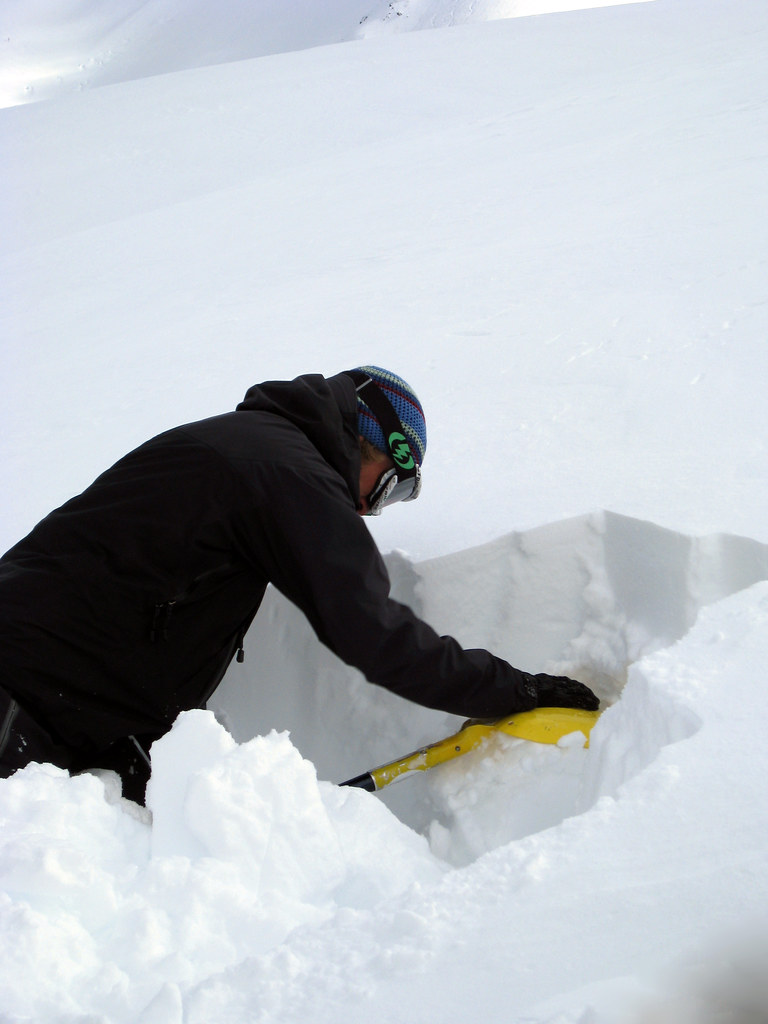
The structure did not improve in January. Storms came in series of three or four, separated by short clearing periods. Each new load added stress to the November layer without adding much in the way of consolidation. Snowpit observations from the Park City ridgeline showed the layer was still discrete and propagating in compression tests in mid-January, six weeks after it formed.
Verheul, who had trained on a Swiss snowpack that tends to stabilise within ten days of any given storm, found this incomprehensible. He said so, in the office, on 19 January. Ostrowski told him that the continental snowpack of the Rockies kept its grudges. Buenger said it was the price of skiing powder in a dry climate, and went back to his keyboard.
The forecasting itself is part observation, part judgement, part rhetoric. Each morning the team reviews data from twelve automated weather stations, the previous day's field observations submitted by guides and recreational observers, and a 0500 telephone briefing with the National Weather Service in Salt Lake. They then write a bulletin that must convey, in under five hundred words, the probability of an avalanche of consequence in five terrain categories across three elevations.
The hard part is not the data. The hard part is the language.
A bulletin that overstates the hazard erodes credibility. A bulletin that understates it can kill people. Litvak keeps a printed sheet on the wall beside her monitor with the names of seven Wasatch backcountry skiers who died between 2008 and 2023. She does not refer to it. It is simply there.
On 2 February a skier triggered a slide on a slope called Greeley Bowl, above Big Cottonwood Canyon, that propagated three hundred metres across the start zone and ran fifteen hundred metres into the bottom. The crown was three metres deep in places. The skier, who was alone, was killed. He had read the bulletin that morning. The bulletin had rated the hazard Considerable at upper elevations on north and east aspects, which was where he went.
The bulletin was not wrong. The skier was not negligent. Considerable hazard means human-triggered avalanches are likely, and large avalanches are possible. The skier had calculated, as backcountry skiers do, that the probability was low enough for the slope he chose. He was wrong about that slope, on that day.
The forecasters held a meeting on 3 February at which no one spoke for the first six minutes. Ostrowski eventually said that the language of the bulletin had been correct and that this did not help.
By mid-March the November layer was still active, fourteen weeks after it formed. Litvak noted that this was the longest persistent weak layer she had observed in fifteen years of forecasting in the Wasatch. The forecast for the final weekend of March rated the hazard High on north aspects above 9,500 feet, a rating that would have been considered alarmist in December for the same conditions.
The season closed officially on 14 April, with the final bulletin written by Verheul. He thanked the observers, the guides, and the dispatchers at Utah DOT. He noted that the November layer had finally entered what forecasters call a dormant phase, meaning it would no longer propagate in standard tests, though it remained present in the snowpack and would persist into early summer.
He did not say that it had been a hard season. The bulletin form does not allow for that kind of statement. He simply listed the data and the conclusions, and signed off.
Three people died in avalanches in the central Wasatch in the 2025-26 season. The five-year average is four. By the metric of bodies counted, it was a successful winter.
The forecasters do not speak in those terms. They speak about the snowpack, the language of the bulletin, and the people who read it. They will be back in the office on 1 November.